Why Wheat Ridge Appeals To First-Time Buyers And Investors
May 7, 2026
May 7, 2026
If you are trying to break into the west metro market, Wheat Ridge stands out for a simple reason: it offers a different kind of opportunity. Instead of relying on brand-new subdivisions or a lowest-price story, Wheat Ridge appeals to buyers who want established housing, practical access, and room for future upside. If you are a first-time buyer or a small investor, understanding that mix can help you spot where this city fits your goals. Let’s dive in.
Wheat Ridge offers a combination that is getting harder to find in metro Denver. You can still find older single-family homes, a wider range of housing types, and clear signs of public and private reinvestment.
That matters if you want more than a move-in-ready checklist. For many buyers, the appeal is the chance to buy into an established area and improve a home over time. For small investors, the same pattern can create options for renovation-minded purchases or owner-occupied strategies.
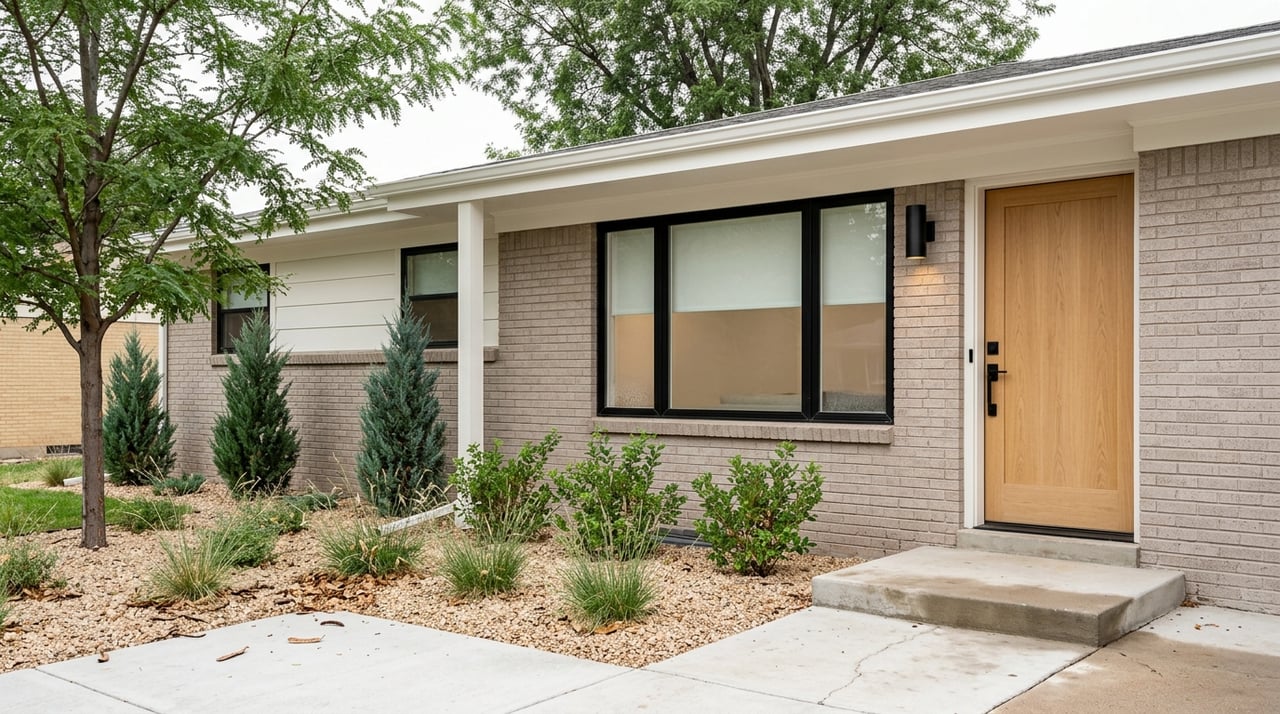
One of Wheat Ridge’s biggest draws is its housing stock. According to the city, nearly 80% of its single-family homes were built between 1940 and 1979, while only 12% were built in 1980 or later.
That age profile gives the city a very different feel from newer suburban markets. You are more likely to see homes with mature lots, established street grids, and properties that may need cosmetic updates, larger renovations, or thoughtful modernization.
The city also reported more than $85 million in additions and remodel valuation from 2010 to 2020. That tells you Wheat Ridge is not just an older housing market. It is also a place where owners have continued investing in improvements.
If you are buying your first home, Wheat Ridge may appeal to you if you are open to a home that is not perfect on day one. In a market where new construction can feel out of reach or limited in character, an older home can offer a path to ownership with room to build equity through updates over time.
That does not mean every property is a project. It means the market includes more homes where your budget may buy potential, not just polished finishes.
For small investors, older housing often means more variation from one property to the next. That can be helpful if your strategy involves improving a property, creating better functionality, or looking for a home that works for owner-occupancy plus rental flexibility.
Wheat Ridge has also broadened its housing mix in recent years. The city points to detached homes, small-lot homes, townhomes, duplexes, workforce apartments, and market-rate apartments, which supports a more varied market than a single-product suburb.
Price matters, especially if you are trying to balance affordability with long-term value. Census QuickFacts shows a 2020 to 2024 median owner-occupied home value of $623,000 in Wheat Ridge, with an owner-occupancy rate of 54.4%.
Compared with nearby west-metro cities, Wheat Ridge tends to sit in the middle. Research for March 2026 showed median sale prices of $576,116 in Lakewood, $592,500 in Wheat Ridge, and $625,000 in Arvada.
That middle position is part of the appeal. Wheat Ridge is not simply the cheapest option, but it may offer a more balanced entry point for buyers who want access, older housing stock, and visible redevelopment activity.
| City | Median sale price | Owner-occupied median value | Owner-occupancy rate |
|---|---|---|---|
| Lakewood | $576,116 | $574,400 | 58.1% |
| Wheat Ridge | $592,500 | $623,000 | 54.4% |
| Arvada | $625,000 | $632,600 | 75.3% |
For many buyers, Lakewood may look like the lower-entry option, while Arvada appears more owner-dominant and slightly pricier. Wheat Ridge often attracts people who want a price point between those two, along with older homes and more obvious corridor and site redevelopment.
Location is not just about distance on a map. It is also about how easily you can move through the region, whether for work, errands, or day-to-day convenience.
Wheat Ridge benefits from the Wheat Ridge•Ward station, which is the end-of-line station for RTD’s G Line. RTD describes the G Line as an 11.2-mile electric commuter rail line connecting Union Station to Wheat Ridge, and the city notes that the line opened in 2019.
That rail access gives Wheat Ridge a practical advantage for buyers who want a west-metro location with direct transit connectivity. It also helps support long-term interest around the station area.
The city has not treated transit as a standalone feature. It has funded station-area improvements that include reconstruction of Ridge Road, 52nd Avenue, and Tabor Street, along with a pedestrian bridge over the tracks and additional public amenities.
For buyers and investors, that matters because infrastructure investment can shape how usable and connected an area feels over time. It is one thing to have a station nearby. It is another to see the surrounding area being improved to support access and activity.
Wheat Ridge’s appeal is not only about what is already there. It is also about what the city is actively planning and supporting.
This is one of the strongest reasons the city catches the attention of both first-time buyers and small investors. The redevelopment pipeline is visible, varied, and tied to long-range planning rather than one isolated project.
West 38th Avenue between Wadsworth and Sheridan is a city-designated high-priority redevelopment area. The 38th Avenue Corridor Plan was adopted in 2011 to support a more vibrant main street, with efforts to improve walking, bicycling, transit use, and wheelchair rolling along the corridor.
That kind of corridor planning can shape how a place functions for years to come. If you are thinking long term, it is worth paying attention to areas where the city has already made its priorities clear.
Wadsworth Boulevard is being rebuilt as a multimodal corridor with continuous-flow intersections at 38th and 44th avenues, a continuous sidewalk on the west side, and a multi-use path on the east. The city says the corridor carries more than 50,000 vehicles a day, and the full upgrade is expected to finish in spring 2026.
Projects like this do not guarantee appreciation, but they do signal ongoing investment in mobility and infrastructure. For buyers comparing west-metro locations, that can make Wheat Ridge feel like a city that is still actively evolving.
Clear Creek Crossing is expected to include multifamily housing, retail, entertainment, restaurants, hotels, a large anchor store, an office complex, and trail connections to the Clear Creek Trail. The city also states that Intermountain Health will relocate Lutheran Hospital to that campus.
The Lutheran Legacy Campus is another major long-term story. The city describes the roughly 100-acre site as a rare opportunity and says the master plan is intended to guide development over the next 15 to 20 years or more.
When you see projects of that scale, it helps explain why Wheat Ridge often appeals to buyers who are thinking beyond the next year or two. The case for the city is stronger as a long-term, project-driven story than as a short-term speculation play.
Wheat Ridge has also adopted policies that support a more flexible housing landscape. The city approved an Affordable Housing Strategy and Action Plan in January 2023 and a new City Plan in 2025 that guides growth through 2040.
Those plans reinforce that housing diversity, infrastructure investment, and corridor revitalization are not one-off decisions. They are part of a broader direction for the city.
Accessory dwelling units, or ADUs, have been allowed since August 15, 2022, in all residential, agricultural, planned development, and mixed-use neighborhood zone districts. The city says ADUs cannot be sold separately and do not require additional parking.
For some buyers, that opens up practical possibilities. You might look at ADUs through the lens of multigenerational living, added flexibility on a property, or an owner-occupied setup that supports your budget in a creative way.
For first-time buyers, Wheat Ridge often makes sense when you want an established neighborhood feel without focusing only on brand-new inventory. The city gives you a chance to look at homes with character, mature surroundings, and room to improve over time.
It can also be a good fit if you want to stay realistic about your budget while still buying in a market with transit access and visible reinvestment. In that way, Wheat Ridge offers a more layered value story than simply chasing the lowest price.
For small investors, Wheat Ridge checks several boxes at once. Older stock can create renovation potential, the housing mix is more varied than in many suburban markets, and the owner-occupancy rate suggests a more mixed tenure environment than places like Arvada.
There is also a clear public signal that the city is investing in infrastructure, corridor upgrades, and long-term planning. That does not mean every property will be a fit, but it does mean the city has a credible framework for ongoing change.
Wheat Ridge appeals to first-time buyers and investors because it offers a practical middle ground. You get older homes with update potential, a mid-market price point relative to nearby cities, direct commuter rail access, and a redevelopment pipeline that is easy to see on the ground.
If you are looking for a west-metro city where the opportunity is tied to established housing and long-term change, Wheat Ridge deserves a closer look. And if you want help comparing Wheat Ridge with other Denver-area options, the team at Freadhoff Home Group can help you evaluate what fits your goals.
Stay up to date on the latest real estate trends.